

When the Disaster Never Happens: An Environmental Coverage Gap Hiding in Plain Sight
Introduction
Industrial facilities that manufacture, store, process, or transport hazardous materials routinely operate with extensive safety systems designed to prevent catastrophic environmental incidents. Most of the time, those systems work exactly as intended. Occasionally, however, an unforeseen event can create a credible threat of a catastrophic environmental release, prompting immediate action by regulators, emergency responders, and civil authorities. Fortunately, many of these situations are resolved before a worst-case outcome occurs. Nonetheless, increasing public awareness and regulatory scrutiny have highlighted the challenges associated with evacuating residents and businesses when such threats arise.
What happens when the financial consequences of a pollution event arrive before the pollution event itself?
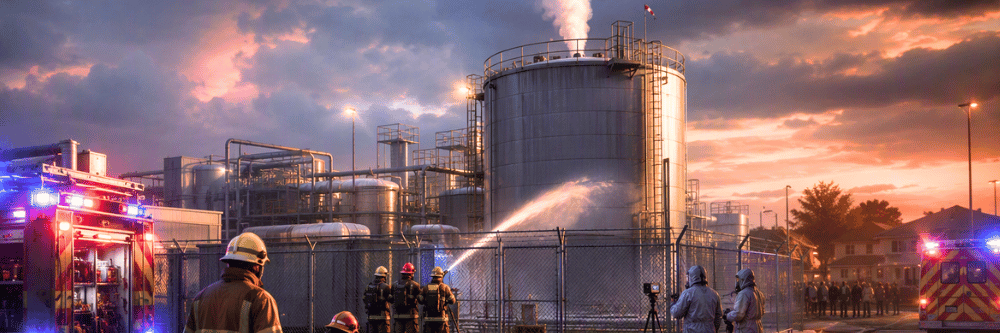
Consider a scenario where a containment system experiences an unexpected event that creates an imminent threat of a catastrophic environmental release. Regulatory authorities take immediate action. Emergency responders establish exclusion zones. Civil authorities issue evacuation or shelter-in-place orders. Nearby businesses lose access to their premises. Residents are displaced. Public agencies incur substantial response costs.
Swift intervention prevents the feared catastrophic outcome. From a public safety perspective, that is a success. From an insurance coverage perspective, however, the answer may be less clear.
Traditional environmental insurance generally responds to a pollution condition. However, substantial third-party impacts may arise before any pollution condition is confirmed when regulators and emergency responders act in response to a credible threat of release. This can create significant liabilities even when the release never occurs.
To address this exposure, Berkley Specialty Excess developed its Critical Hazard Event — Loss of Use and Evacuation Expense Coverage endorsement.
This endorsement is designed to respond when an unforeseen event involving a covered containment system creates an imminent threat of a catastrophic pollution release and governmental authorities take emergency action to protect public health and safety. Coverage focuses on certain third-party consequences arising from those emergency measures and may apply regardless of whether the feared release ultimately occurs.
As industrial facilities continue to operate under increasing public and regulatory scrutiny, these low-frequency but potentially high-severity scenarios will remain an important focus for risk managers, brokers, underwriters, attorneys, and insureds alike.
The Critical Hazard Event — Loss of Use and Evacuation Expense Coverage endorsement was developed to address a narrow but meaningful gap that can arise when governmental authorities respond to a credible threat of catastrophic pollution before it can be determined whether a covered Pollution Condition has occurred.
IMPORTANT INFORMATION
This article is for general informational purposes only and does not constitute insurance, legal, or risk management advice. Consult your broker and legal counsel for guidance specific to your organization.